
From the Helm
Strategic Notes for Charter Business Owners.

Charter Boat Business Plan: Why Tuesday’s Cancelled Trip Cannot Be Saved
Most captains don't have a business plan; they have a boat and a dream. Discover why traditional business plans fail in the charter industry, and learn the 4 mathematical pillars you must build to survive weather days, fixed costs, and captain burnout.

How to Run a Successful Charter Business: From Deckhand Technician to CEO
You started a business because you love fishing, but you're finding that being a great "technician" doesn't mean you're running a successful business. Discover the mental shift required to stop scrubbing decks and start building systems like a CEO.
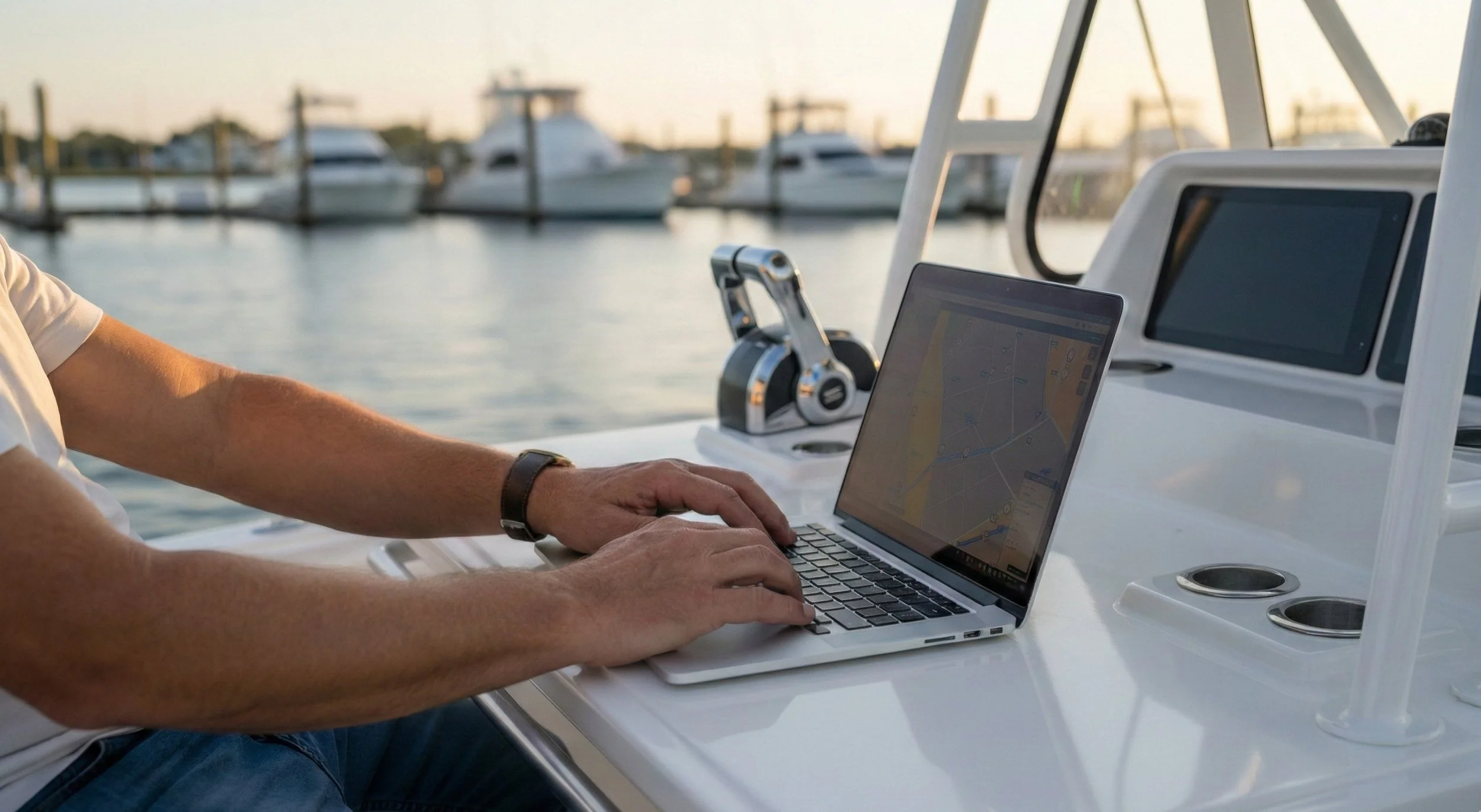
How to Get More Charter Bookings: Building Your Own "Digital Dock"
Stop waiting for walk-up clients at the marina. Learn the three pillars of a profitable "Digital Dock" and how to engineer your online presence to attract high-end charter clients before they even see the water.
How to Start a Charter Fishing Business: Don't Buy the "Ego Boat" First.
Most new captains make a fatal business error before they even leave the dock: they buy the "Ego Boat." Discover why taking on massive boat payments on Day One is the fastest way to go broke, and how staying mobile can save your first season.

The Math of Burnout: Why Your $700 Trip might be Losing Money
Captains are great at reading water, but terrible at reading P&L statements. If you charge $700 for a trip because "that's what the guy down the dock charges," you are letting a stranger dictate your salary.
When you factor in engine depreciation, insurance, and the "Perishable Inventory" of weather cancellations, your actual take-home on a charter might be less than minimum wage. It’s time to stop pricing for occupancy and start pricing for profit.

Sole Proprietor vs. LLC: Don’t Build Your Business on a "Job" Hull
Most new captains make their first mistake before they even leave the dock: they buy the boat and print cards, but they never form a company.
By default, you are a "Sole Proprietor." In the eyes of the law, there is no difference between your personal savings and your business liability. If a passenger gets injured, you aren't just losing the boat; you could lose your truck, your house, and your personal assets. We break down why the LLC is the only hull shape that handles the heavy seas of liability.

The Hobby Trap: Why the IRS Targets Charter Captains
You’ve heard the rumor that 80% of businesses fail. That’s a myth. In the charter world, most captains don’t fail—they slowly bleed out.
The IRS has a specific code (Section 183) for businesses that don't consistently show a profit: they call them "Hobbies." If you are flagged, your deductions vanish, and your audit risk skyrockets. Here is the difference between a "Tax Write-off" boat and a legitimate charter business, and how to prove your profit motive to the government.