
The Hobby Trap: Why the IRS Targets Charter Captains

You’ve heard the rumor that 80% of businesses fail in the first year. That’s a myth. In the charter world, most captains don’t fail dramatically—they slowly bleed out.
They run the boat for three years, realize they are working 100 hours a week just to break even, and quietly decide it’s easier to go back to recreational fishing. But for some, the end isn't quiet. It comes in the form of a certified letter from the IRS.
There is a pervasive myth on the dock that goes like this: "I'll just get my captain’s license, run a few trips, and write off my boat, my truck, and my fuel against my day-job income."
This is the fastest way to trigger an audit. The IRS has a specific section of the tax code designed to stop exactly this behavior: Section 183, commonly known as the "Hobby Loss Rule."
The "Tax Write-Off" Boat vs. The Business
The IRS isn't stupid. They know that fishing is fun. They also know that owning a boat is expensive. Consequently, they are naturally suspicious of anyone claiming their "weekend fun" is a deductible business expense.
Under Section 183, the IRS classifies your operation in one of two ways:
A Business: Engaged in for profit.
A Hobby: Not engaged in for profit.
The distinction is critical. If you are a Business, you can deduct expenses in excess of your income (reporting a loss) to offset other income. If you are a Hobby, you can generally only deduct expenses up to the amount of your charter income. You cannot claim a loss, and you certainly cannot use your boat to lower the taxes on your W-2 salary.
The "3-in-5" Test
How does the IRS decide? The clearest path is the "Safe Harbor" rule. The IRS presumes you are a for-profit business if you report a taxable profit in at least 3 out of the last 5 tax years.
But let’s be real—most charter businesses show a loss in their first year or two due to startup costs (gear, branding, safety equipment). So, if you are losing money, how do you prove you aren't just a hobbyist looking for a tax break?
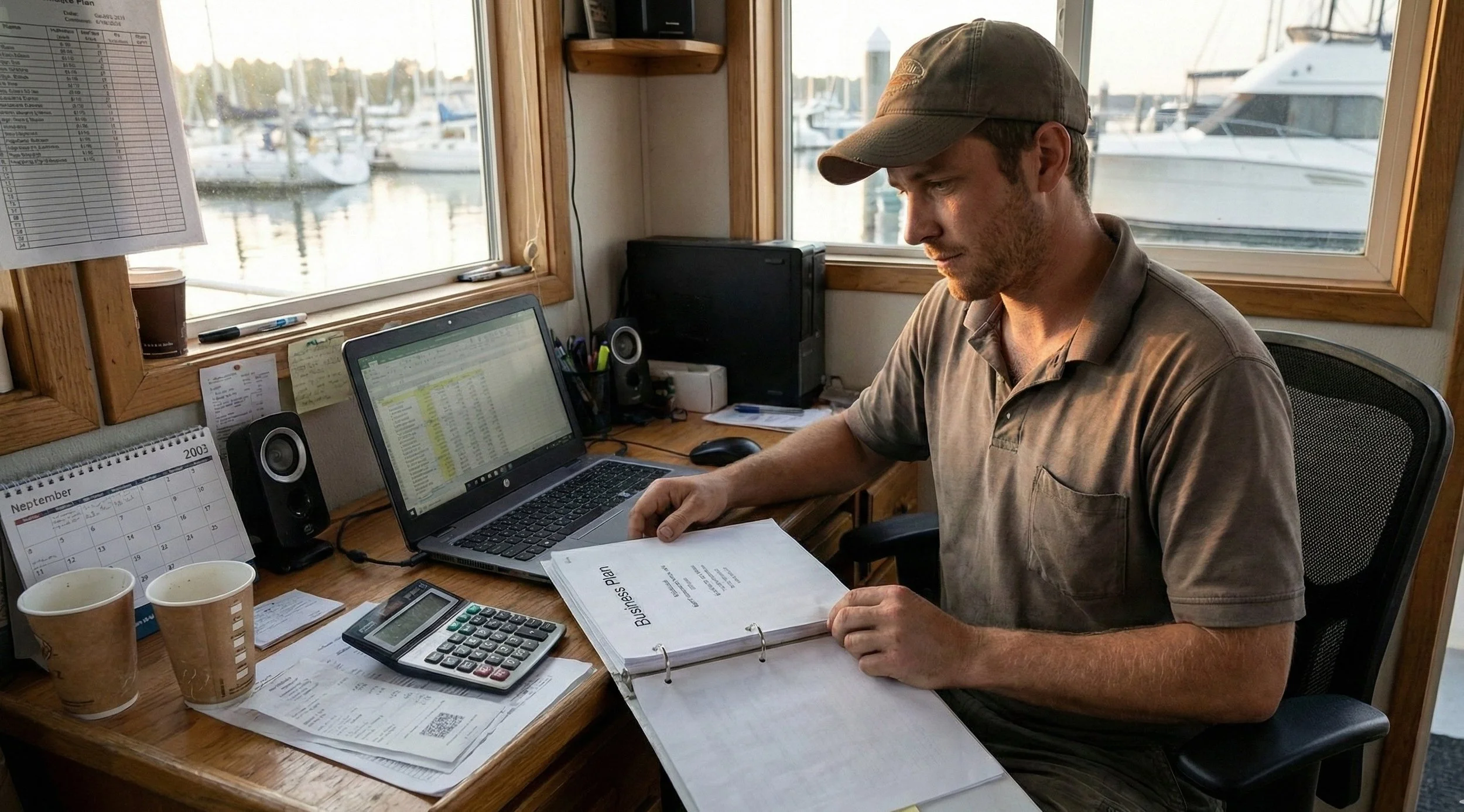
Proving Your "Profit Motive"
If you are audited, the IRS looks at nine factors to determine if you are actually trying to make money. You don't need to be profitable immediately, but you must act like a CEO who intends to be profitable.
Here are the three biggest areas where captains fail the test:
1. The "Business-Like Manner" Test A hobbyist keeps receipts in a shoebox (or the dashboard of the truck). A business owner has a separate bank account, uses accounting software (like QuickBooks or Wave), and tracks every gallon of fuel. If you are commingling personal grocery money with your bait money, you look like a hobbyist.
2. The Marketing Effort If your boat is "Open for Business" but you have no website, no business cards, no Google Business Profile, and you rely solely on word-of-mouth from buddies, the IRS will argue you aren't really trying to attract customers. Real businesses invest in finding clients.
3. The Pleasure Factor This is the danger zone. If you claim to be on a "scouting trip" (business expense), but your logbook shows you were out with your brother-in-law drinking beer and keeping a full limit of fish, the IRS will view that as personal recreation. A charter business logbook should track specific data: fuel burn, engine hours, and business purpose—not just "went fishing."
The Bottom Line
You cannot accidentally build a profitable charter business. You have to engineer it.
If you are running trips just to cover your gas money, you are not a professional captain—you are a subsidized hobbyist. The government is cracking down on the "Gig Economy," and the maritime sector is on their radar.
Don't wait for the audit letter to get your house in order. Treat your operation like a Fortune 500 company from Day One, even if you only have one boat.
[Free Download]
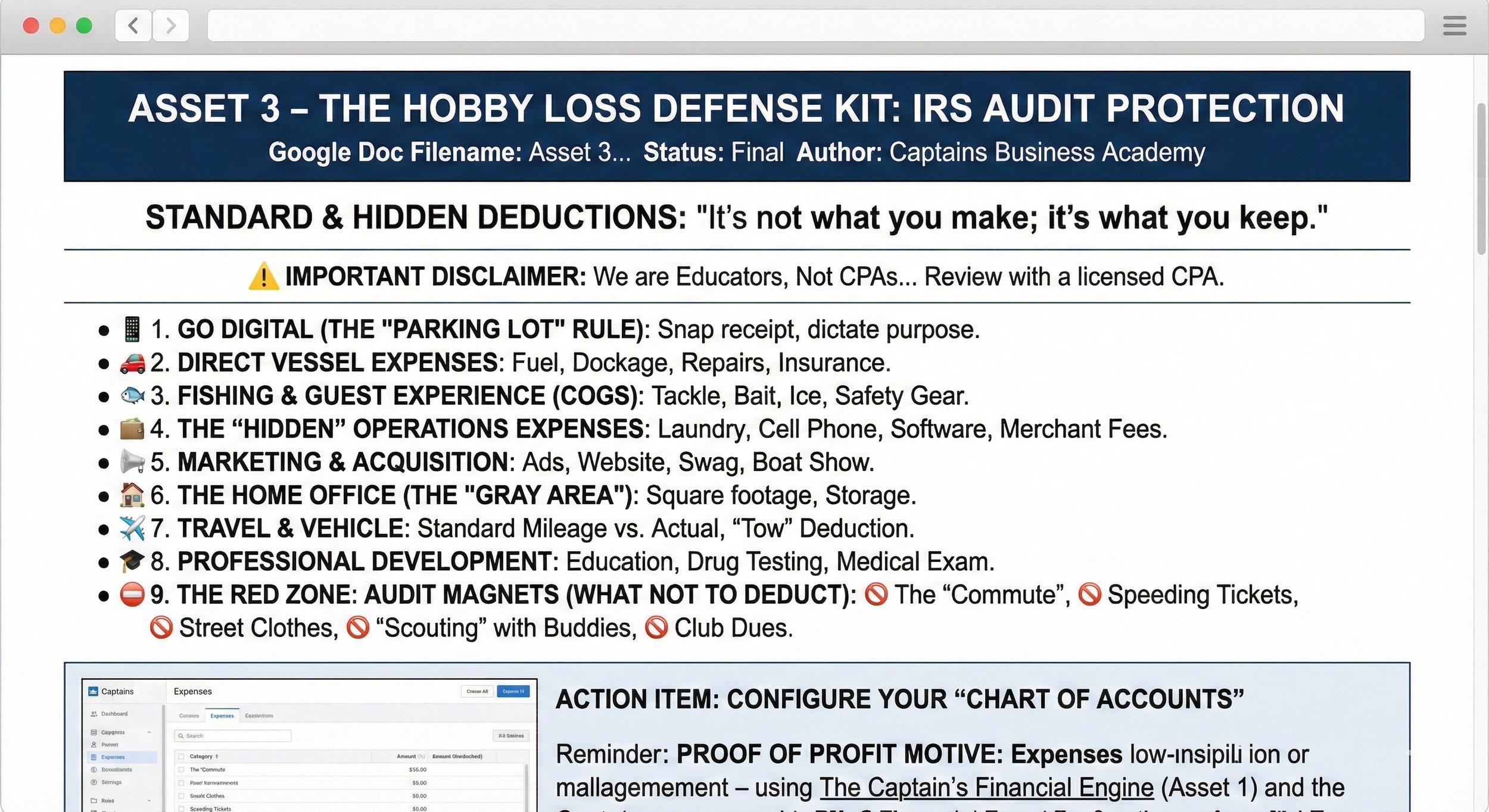
Worried about your status? Most captains don't know they are in the "Hobby Trap" until it's too late. We’ve created a Free IRS Section 183 Audit Checklist based on the 9-point test used by tax courts.
About Captains Business Academy
We don't teach you how to catch fish; you already know how to do that. We teach you the business systems, financial engineering, and legal structures required to turn a fishing habit into a profitable enterprise. View the Course Curriculum
Ready to Stop Guessing?
Most captains run their business by "feeling." We run ours by the numbers. If you are ready to install a professional operating system for your charter business, join the Academy today. You'll get instant access to the Financial Engine Calculator, the marketing templates, and the compliance checklists. Enroll in the Academy
The information provided in "From the Helm" is for educational purposes only and does not constitute legal, tax, or financial advice. We are experienced captains and business owners, not attorneys or CPAs. Always consult with a qualified professional regarding your specific business situation.